
ECB interest rates 2026: Trade Policy Uncertainty and Impact
Marcus Reinhardt
Senior Markets Strategist

ECB interest rates 2026 are set in an environment where the European Central Bank explicitly identifies ongoing global trade policy uncertainty as a key factor clouding the economic outlook. Tariffs, supply-chain shifts, and unpredictable trade rules affect import prices, growth, and thus the path of eurozone inflation 2.6%. With the deposit facility rate at 2.00% and main refinancing operations defining the corridor, the Governing Council must respond to actual data rather than to forecasts that may be wrong when trade relations change. For the EU monetary policy outlook, the message is clear: flexibility and data-dependence are essential. At the same time, a parallel long-tail risk has gained attention: the Bitcoin quantum threat. While Frankfurt focuses on trade channels and eurozone GDP growth 1.2%, crypto analysts debate the Bitcoin P2PK vulnerability and the Satoshi 1M BTC quantum scenario. Understanding both—trade uncertainty and technological risk—matters for anyone allocating across euro and digital assets.
Eurozone inflation forecast 2.6% and trade policy channels
The ECB’s 2% inflation target is the anchor. Staff projections show eurozone inflation 2.6% in the forecast horizon, but that path can be shifted by trade developments. Tariffs and trade restrictions can raise import prices and push inflation above target; supply-chain disruptions can weigh on growth. Uncertainty itself can dampen investment as firms delay decisions until trade rules become clearer. The ECB deposit rate 2.00% and the corridor around main refinancing operations are set to be mildly restrictive—consistent with a gradual return of eurozone inflation 2.6% to target—but the optimal level depends on how trade policy actually evolves.
The deposit facility rate and main refinancing operations form the core of the framework. When trade policy raises import prices, the ECB must decide whether to tighten further to offset the effect or look through a temporary inflation spike. When trade uncertainty hits investment and eurozone GDP growth 1.2%, the case for patience or eventual easing strengthens. The chart below illustrates how eurozone inflation 2.6% and ECB interest rates 2026 interact with trade-related shocks; the Fed vs ECB comparison and global spillovers add to the complexity. As long as data confirm a credible path toward eurozone inflation 2.6%, the ECB can hold the deposit facility rate steady while staying ready to adjust.
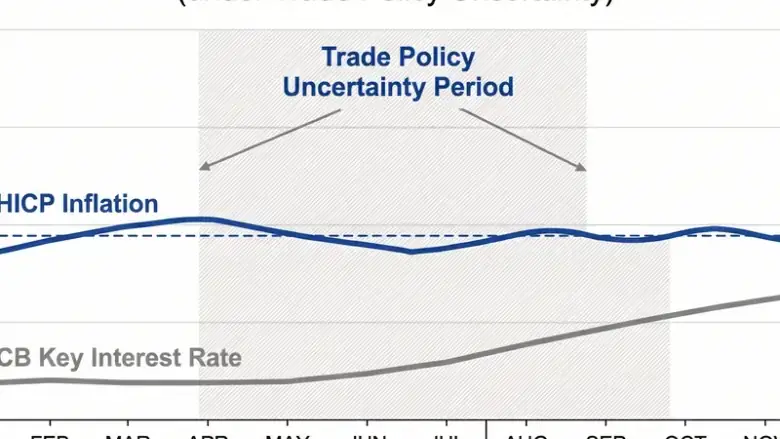
Data source: ECB, 2026.
The data-dependent approach is well suited to this environment. Rather than guessing the direction of trade policy, the Governing Council can respond to actual inflation and growth outcomes. The quantitative easing pause and subsequent normalisation have left a clear rate structure; the DAX 40 forecast and broader risk sentiment will continue to reflect both the level of ECB interest rates 2026 and the credibility of the disinflation path in the face of trade uncertainty.
Bitcoin quantum threat parallel
While policymakers grapple with trade policy uncertainty, digital-asset markets are weighing the Bitcoin quantum threat. The possibility that quantum computers could one day break ECDSA and target certain Bitcoin UTXOs has put the spotlight on early address designs. The most cited case is Satoshi 1M BTC; the broader issue is the Bitcoin P2PK vulnerability. In the P2PK vs P2PKH debate, Pay-to-Public-Key outputs are more exposed because public keys are visible on-chain, creating a permanent attack surface for quantum computing ECDSA attacks.
CoinShares quantum research and similar studies estimate that around 4 million BTC exposed have at some point revealed their public keys. A mempool 10-minute attack remains beyond current quantum hardware, but the theoretical vulnerability has spurred work on post-quantum cryptography and quantum-resistant wallets. Satoshi Nakamoto 1.1M BTC symbolises the Bitcoin quantum threat; for investors who hold both euro and crypto assets, the same discipline used to assess ECB interest rates 2026 and trade uncertainty should extend to this long-tail technological risk. The EU monetary policy outlook and the Bitcoin quantum threat both require forward-looking assessment rather than reactive response.
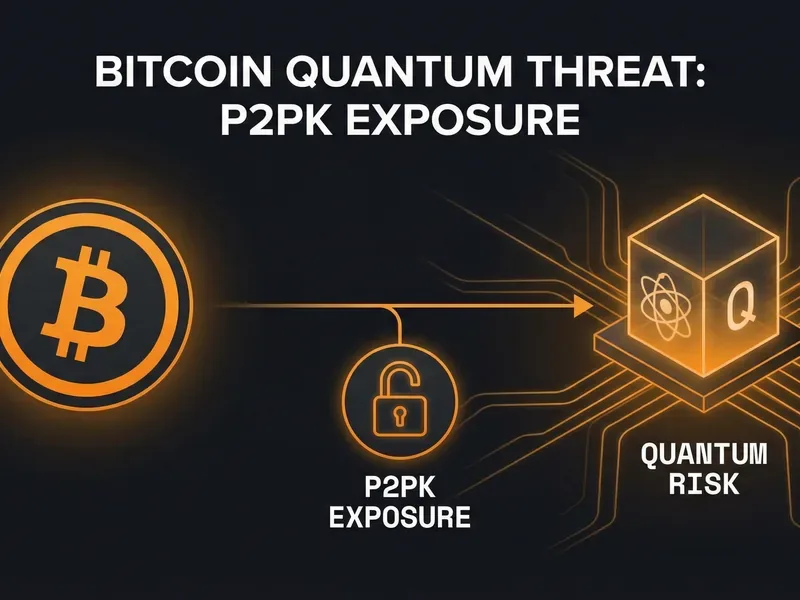
Data source: CoinShares, 2026.
The analogy is instructive: just as trade policy uncertainty forces the ECB to stay flexible and data-dependent, the Bitcoin quantum threat forces the ecosystem to prepare before the risk becomes practical. In both domains, credibility depends on acting ahead of the shock—whether that is adjusting ECB interest rates 2026 when trade effects materialise or migrating value to quantum-resistant designs before the Bitcoin P2PK vulnerability is exploited.
Trade policy channels and ECB response
Trade policy affects the euro area through several channels. Tariffs and restrictions can raise import prices and inflation; supply-chain disruption can reduce growth. Uncertainty can dampen investment and hiring. The euro area’s economic resilience—solid balance sheets, tight labour markets—provides a buffer, but the ECB cannot ignore the impact of trade developments on eurozone inflation 2.6% and eurozone GDP growth 1.2%. The Governing Council has stated that it stands ready to adjust all of its instruments if needed; the deposit facility rate and main refinancing operations are the primary levers.
For the EU monetary policy outlook, the implication is that the ECB will continue to take a meeting-by-meeting approach. Each decision will be based on incoming data on inflation, growth, and financial conditions—including any effects of trade policy. The Fed vs ECB comparison will influence the euro and capital flows; the DAX 40 forecast and broader asset prices will reflect both the level of ECB interest rates 2026 and the credibility of the path toward eurozone inflation 2.6% in an uncertain trade environment. Geopolitical tensions and trade policy uncertainty are explicitly recognised as sources of risk; the response is vigilance and flexibility, not pre-commitment to a fixed path.
EU monetary policy outlook 2026
Over the coming year, trade policy uncertainty is likely to persist. The ECB is expected to keep the deposit facility rate near 2.00% while monitoring how trade developments affect inflation and growth. If eurozone inflation 2.6% settles durably around or below target and growth weakens—whether due to trade or other factors—gradual rate cuts could be considered; if inflation proves stickier, the corridor could be held or raised. The 2% goal and a flexible, data-driven framework will continue to define the EU monetary policy outlook.
For investors with exposure to both euro and digital assets, the lesson is consistent: the same analytical rigour applied to ECB interest rates 2026, eurozone inflation 2.6%, and trade policy uncertainty should extend to long-tail risks such as the Bitcoin quantum threat. Trade uncertainty is a reminder that policy must remain adaptable; the Bitcoin P2PK vulnerability and Satoshi 1M BTC narrative are a reminder that technological risks require the same forward-looking discipline. ECB interest rates 2026 and the path to eurozone inflation 2.6% anchor the macro story; the Bitcoin quantum threat anchors the case for robust risk management across traditional and digital portfolios.
Positioning for the year ahead therefore means watching both trade headlines and ECB communication. A sudden shift in tariffs or supply chains can alter the inflation and growth mix; the Governing Council will respond with the deposit facility rate and other tools as needed. Keeping allocation aligned with your view on how trade and policy actually evolve is more useful than betting on a single baseline scenario.